- Associate degrees
- Bachelor’s degrees
- Master’s degrees
- Cybersecurity certifications
- Cybersecurity initiatives in WY
- FAQs
Students exploring a cybersecurity degree in Wyoming will find a range of college pathways aligned with employer demand across finance, defense contracting, insurance, and healthcare.
This page stays focused on degree and school options and references institutions only when they offer distinctive workforce partnerships, research activity, or specialized training initiatives.
How we keep this page current
This page is periodically reviewed using workforce and education data from CyberSeek, the U.S. Bureau of Labor Statistics, the Wyoming Department of Workforce Services, and official information from state cybersecurity offices and university initiatives.
When institutions are referenced, program information is verified against official institutional or government sources. Workforce statistics and program descriptions are reviewed regularly, and time-sensitive claims are updated or removed as new information becomes available.
Ad
cybersecurityguide.org is an advertising-supported site. Clicking in this box will show you programs related to your search from schools that compensate us. This compensation does not influence our school rankings, resource guides, or other information published on this site.
Featured Cybersecurity Degree Programs
| School Name | Program | More Info |
|---|---|---|
| Southern New Hampshire University | Online BS in Cybersecurity or Online MS in Cybersecurity | website |
| Eastern Oregon University | Online BS in Cybersecurity | website |
| UC Berkeley School of Information | Master’s in Cybersecurity | No GRE/GMAT Required | website |
| Purdue University Global | Online BS in Cybersecurity | website |
Cybersecurity workforce demand in Wyoming
Cybersecurity workforce demand in Wyoming reflects steady employer needs across industries such as energy, government, healthcare, and infrastructure.
According to CyberSeek’s cybersecurity workforce analysis, Wyoming consistently records hundreds of cybersecurity-related job postings annually, indicating ongoing employer demand for cybersecurity professionals. CyberSeek measures employer demand through online job postings rather than confirmed employment totals.
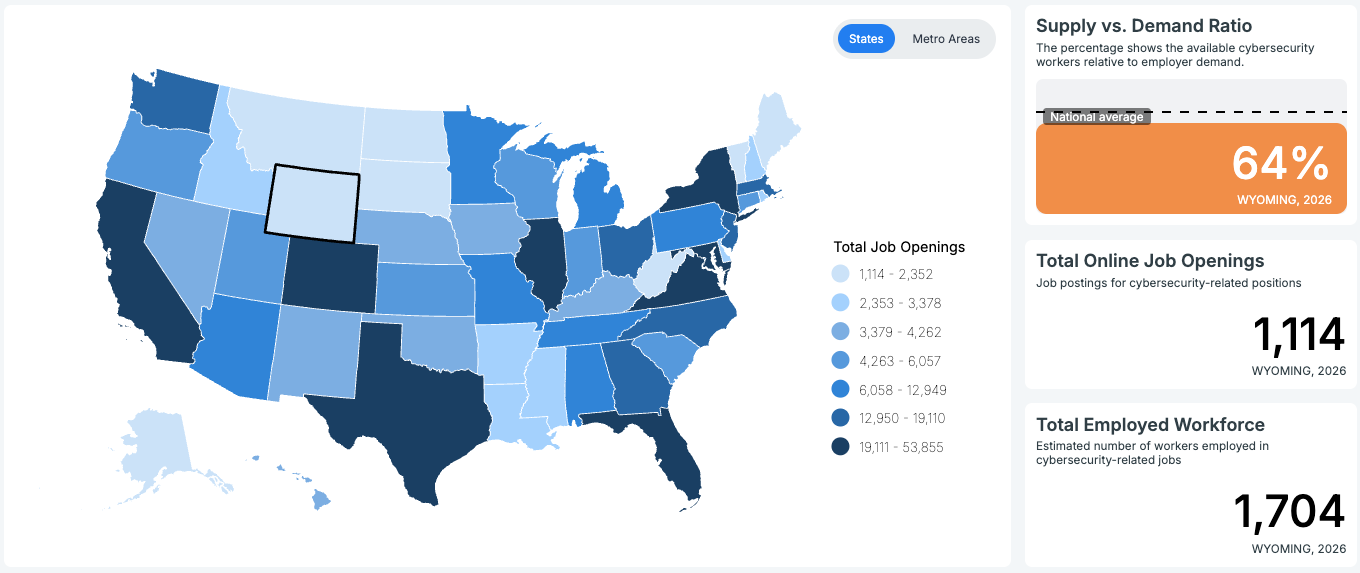
Labor market data from the Wyoming Department of Workforce Services indicates continued demand for computer and information technology professionals across the state, including occupations related to network security, systems administration, and information security analysis.
The U.S. Bureau of Labor Statistics reports that information security analysts in Wyoming typically earn mean annual wages approaching or exceeding $100,000, depending on experience and industry sector.
Another cyber-adjacent occupation tracked by the BLS is network and computer systems administrators, which often serves as a pathway into cybersecurity careers. In Wyoming, professionals in this occupation typically earn mean annual wages around the $90,000 range, depending on specialization and experience.
These sources measure different aspects of cybersecurity employment:
- CyberSeek measures employer demand through job-posting data
- BLS employment estimates measure workforce size and wages
- State labor market projections estimate occupational growth
Together, these datasets provide context for students evaluating cybersecurity degree programs in Wyoming.
Related resources
Cybersecurity degree pathways in Wyoming
Students interested in cybersecurity education in Wyoming typically pursue one of several pathways: associate degrees, bachelor’s programs, graduate programs, and certification-focused workforce training.
Associate degrees
Associate-level cybersecurity programs are commonly offered through community colleges and technical education systems. These programs focus on foundational IT and cybersecurity skills such as:
- Network administration
- Operating system security
- Security monitoring and incident response basics
- Vulnerability assessment fundamentals
Casper College
Casper, Wyoming Program: A.A.S. in Cyber Security
Credits: 60
Cost per credit: $147 in state | $357 out of state
Delivery method: Campus
Program highlights:- Overview: This program prepares students to protect various sectors from cyber risks.
- Jobs: Trains students for IT support roles.
- Certification: Graduates can earn a CCENT certification.
Laramie County Community College
Cheyenne, WyomingProgram: Associate of Applied Science in Cybersecurity
Credits: 67
Cost per credit: $154 in state | $364 out of state
Delivery method: Campus, Online
Program highlights:- What's the Program About? LCCC's Cybersecurity program teaches students how to protect online data.
- Courses: Students will learn about computer hardware, operating systems, and advanced security topics.
- Experience: Students get hands-on experience with tools like the Cyber Range and Microsoft Datacenter Academy.
Sheridan College
Sheridan, WyomingProgram: Associate of Applied Science in Cyber Security
Credits: 61
Cost per credit: $322 in state | $742 out of state
Delivery method: Campus, Online
Program highlights:- Overview: Trains students for jobs in computer and online security.
- Certifications: The program also helps students get ready for well-known security certifications and teaches them to communicate well in the workplace.
- Balanced Curriculum: Mix of technical courses like Linux Basics and soft skills like English and Writing.
Many associate programs also prepare students for industry certifications such as CompTIA Security+, Network+, or Cisco networking certifications.
Students evaluating associate programs should look for:
- Transfer pathways into bachelor’s degree programs
- Hands-on cybersecurity labs or simulated environments
- Coursework aligned with the NICE Cybersecurity Workforce Framework
Bachelor’s degrees
Bachelor’s programs in cybersecurity or computer science with a security emphasis provide broader technical training in cyber defense, digital forensics, and secure systems design.
Typical coursework includes:
- Network defense and monitoring
- Cryptography
- Secure software development
- Digital forensics
- Security architecture and risk management
Some universities operate cybersecurity research initiatives or workforce partnerships that support applied cybersecurity training.
For example, the University of Wyoming supports cybersecurity research and education through computing and data science initiatives connected to secure computing and infrastructure protection.
Programs connected to research initiatives or industry partnerships can provide students with opportunities for internships, applied cybersecurity research, and collaborative cybersecurity projects.
Master’s degrees
Graduate cybersecurity programs provide advanced training in areas such as cyber operations, threat intelligence, and cybersecurity governance.
Typical master’s-level coursework may include:
- Advanced network security
- Cyber threat intelligence
- Secure systems engineering
- Incident response management
- Cybersecurity risk governance and policy
Graduate degrees are commonly pursued by professionals with backgrounds in computer science, information technology, or engineering who want to move into specialized cybersecurity roles or leadership positions.
Certifications and workforce programs
Many cybersecurity professionals supplement academic degrees with industry certifications.
Certifications frequently requested in cybersecurity job postings include:
- Cisco cybersecurity certifications
- CompTIA Security+
- Certified Information Systems Security Professional (CISSP)
- Certified Ethical Hacker (CEH)
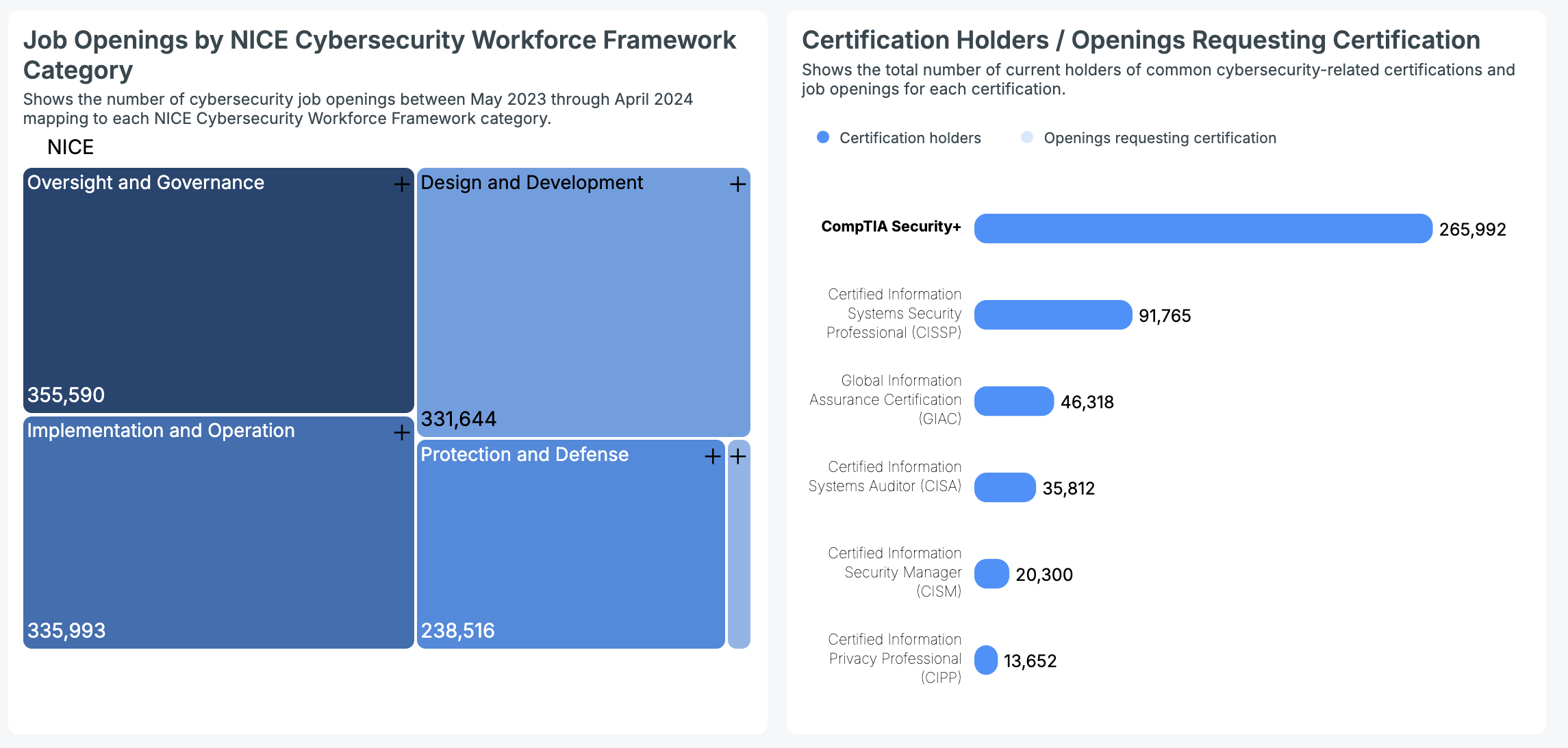
Short-term cybersecurity certificate programs and workforce training initiatives may also be offered through community colleges or continuing education programs.
Students evaluating these programs should prioritize training that includes hands-on labs, certification preparation, and employer partnerships.
Casper College
Casper, WyomingProgram: Certificate in Computer Security
Credits: 31
Cost per credit: $147 in state | $357 out of state
Delivery method: Campus
Program highlights:- Purpose: The program trains students to safeguard digital data and computer systems.
- Learning Approach: It combines classroom lessons with hands-on experience.
- CCNA Exam: Finishing the program sets students up to take the CCNA test.
Laramie County Community College
Cheyenne, WyomingProgram: Cybersecurity Administrator Credit Diploma
Credits: 17
Cost per credit: $154 in state | $364 out of state
Delivery method: Campus, Online
Program highlights:- What: A course for those with some network experience, aiming to start in cybersecurity. It covers topics like protecting networks and databases.
- Jobs: After finishing, you could become a network engineer, IT manager, or similar.
- Transferring: You might be able to use these courses as credits at other colleges.
Sheridan College
Sheridan, WyomingProgram: Cyber Security Certificate
Credits: 31
Cost per credit: $322 in state | $742 out of state
Delivery method: Campus
Program highlights:- Skill Development: Trains students to detect and counteract threats and vulnerabilities in computer systems.
- Regulatory Insight: Provides understanding of computer security laws and how to remain compliant.
- Audience: Tailored for students in the Computer Network Administration AAS and existing IT professionals.
University of Wyoming
Laramie, WyomingProgram: Cybersecurity Certificate
Credits: 20 hours
Cost per credit: $166 in-state | $692 out of state
Delivery method: Campus
Learn more: Program details
Cybersecurity bootcamps in Wyoming
edX
WyomingProgram: Cybersecurity Boot Camp
Credits: 24 weeks
Cost per credit: $12,995
Delivery Method: Online
Learn more: Program details
Scholarship for Service
The National Science Foundation Scholarship for Service (SFS) program funds cybersecurity education for students who commit to working in government cybersecurity roles after graduation.
Participating institutions receive funding to support cybersecurity degree programs and provide scholarships covering tuition, stipends, and professional development opportunities.
Students interested in public-sector cybersecurity careers may benefit from institutions participating in the SFS initiative.
Unique Wyoming cybersecurity initiatives
University of Wyoming cybersecurity research initiatives
The University of Wyoming School of Computing supports research and education initiatives in cybersecurity, data science, and secure computing systems. These initiatives support interdisciplinary research and workforce development efforts related to digital infrastructure protection.
University research initiatives can provide students with opportunities to participate in cybersecurity research projects, internships, and collaborative work with industry or government partners.
State cybersecurity coordination
Cybersecurity coordination for the Wyoming state government is supported through the Wyoming Enterprise Technology Services, which oversees statewide cybersecurity strategy, digital infrastructure protection, and government cybersecurity programs.
State cybersecurity offices often collaborate with universities and workforce development programs to strengthen cybersecurity education pipelines and support cybersecurity workforce development.
Frequently asked questions about cybersecurity degrees in Wyoming
CyberSeek reports hundreds of cybersecurity-related job postings annually in Wyoming, reflecting ongoing demand for cybersecurity professionals across industries such as energy, healthcare, government, and infrastructure.
According to the U.S. Bureau of Labor Statistics, information security analysts in Wyoming typically earn mean annual wages approaching or exceeding $100,000, although salaries vary depending on experience and industry sector.
The best cybersecurity degree depends on career goals. Bachelor’s degrees in cybersecurity or computer science with a security emphasis are common starting points. Programs connected to cybersecurity research initiatives or workforce partnerships may provide additional hands-on experience.
Yes. Many universities offer online or hybrid cybersecurity programs, allowing students to complete coursework remotely while gaining the same foundational cybersecurity knowledge taught in campus programs.
Some community colleges and workforce training programs offer short-term cybersecurity certificate programs or bootcamps designed to prepare students for industry certifications.
CyberSeek job-posting analysis indicates employers frequently request certifications such as CompTIA Security+, CISSP, and Certified Ethical Hacker (CEH).
Yes. Job-posting data from CyberSeek and labor market information from the Wyoming Department of Workforce Services both indicate continued demand for cybersecurity professionals.
Yes. Associate degrees can prepare students for entry-level IT or cybersecurity support roles. Many professionals later complete bachelor’s degrees while working in the field.
Associate degree: about 2 years
Bachelor’s degree: about 4 years
Master’s degree: 1–2 years
Some universities participate in the National Science Foundation Scholarship for Service (SFS) program, which funds cybersecurity education in exchange for service in government cybersecurity roles after graduation.
Cybersecurity professionals in Wyoming work across industries including energy, healthcare, government agencies, technology companies, and infrastructure providers.
Yes. Entry-level cybersecurity roles may include security analyst, security operations center (SOC) analyst, vulnerability analyst, and IT security specialist positions.
Sources
- CyberSeek | Cybersecurity Supply/Demand Heat Map | Accessed March 10, 2026
- U.S. Bureau of Labor Statistics | Occupational Employment and Wage Statistics | Accessed March 10, 2026
- Wyoming Department of Workforce Services | Labor Market Information | Accessed March 10, 2026
- University of Wyoming | School of Computing | Accessed March 10, 2026
- Wyoming Enterprise Technology Services | State Cybersecurity and IT Programs | Accessed March 10, 2026
- National Science Foundation / OPM | Scholarship for Service Program | Accessed March 10, 2026