A strong cybersecurity education page should do more than list schools — it should connect degree options to verified workforce demand and credible public data.
Students looking into a cybersecurity degree in Virginia will find college pathways aligned with hiring demand across finance, defense contracting, insurance, and healthcare.
This page focuses specifically on academic pathways and school-based opportunities. Institutions are referenced only when they operate distinctive workforce, research, or training initiatives that add meaningful value beyond a standard program listing.
How we keep this page current
This page is updated using authoritative sources, including CyberSeek, the U.S. Bureau of Labor Statistics (BLS), Virginia labor market information, the Virginia Information Technologies Agency, and the National Science Foundation Scholarship for Service (SFS) program.
Program descriptions and institutional initiatives are verified against official university or state government pages. Content is reviewed periodically, and time-sensitive claims or outdated metrics are updated or removed as new workforce data becomes available.
Ad
cybersecurityguide.org is an advertising-supported site. Clicking in this box will show you programs related to your search from schools that compensate us. This compensation does not influence our school rankings, resource guides, or other information published on this site.
Featured Cybersecurity Degree Programs
| School Name | Program | More Info |
|---|---|---|
| Southern New Hampshire University | Online BS in Cybersecurity or Online MS in Cybersecurity | website |
| UC Berkeley School of Information | Master’s in Cybersecurity | No GRE/GMAT Required | website |
| University of Maryland Global Campus | Online BS in Cyber Operations or Online BS in Cybersecurity Management & Policy | website |
| Purdue Global | Online BS in Cybersecurity | website |
Cybersecurity workforce demand in Virginia
Virginia consistently ranks among the leading states for cybersecurity employment due to its concentration of federal agencies, defense contractors, and intelligence organizations.
Data from CyberSeek shows that Virginia regularly reports one of the highest levels of cybersecurity job demand in the United States, with tens of thousands of workers employed in cybersecurity-related roles and a large number of annual job postings statewide. These figures reflect employer demand signals from job postings rather than actual employment counts.
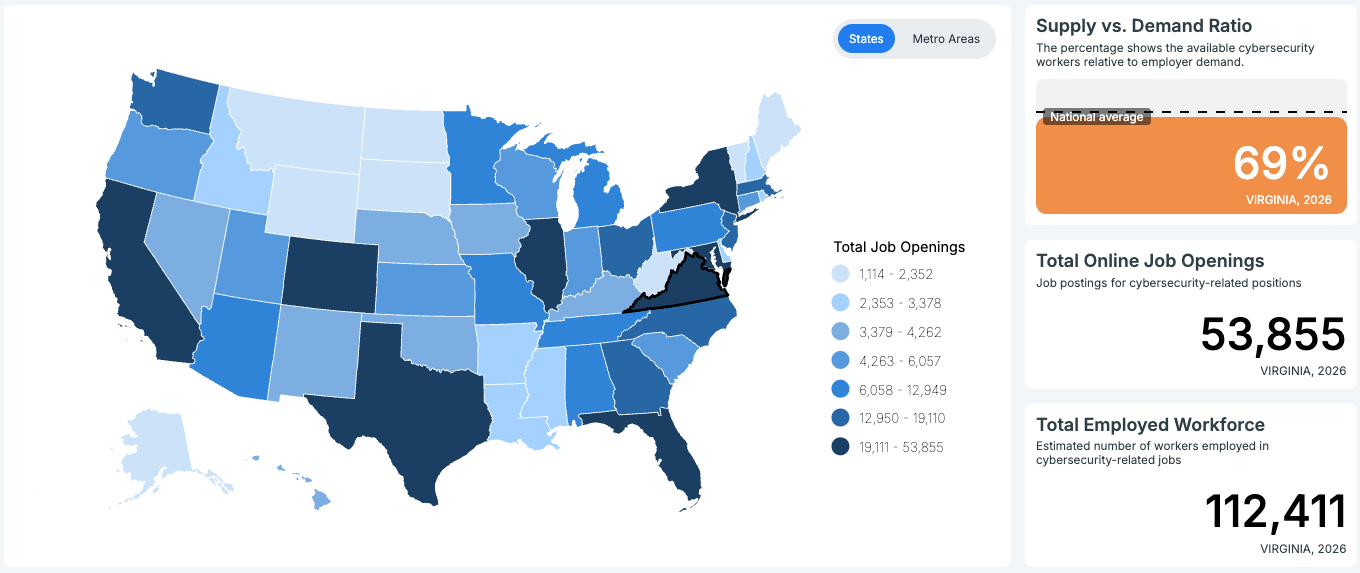
According to the U.S. Bureau of Labor Statistics, Virginia employs a significant number of Information Security Analysts, one of the core cybersecurity occupations. The occupation reports a mean annual wage above $120,000 in the state, reflecting the concentration of government and defense-related cyber roles.
Virginia’s labor market projections and workforce dashboards also track demand across related fields such as network administration and cybersecurity engineering. These projections help estimate future employment needs but differ from job-posting data, which measures current hiring activity rather than long-term workforce size.
Together, these metrics provide complementary perspectives:
- Job postings reflect current hiring demand.
- Employment estimates and projections indicate the long-term size and growth of the workforce.
Both signals show Virginia maintaining a strong demand for cybersecurity talent.
“`htmlCybersecurity degree pathways in Virginia
Students interested in cybersecurity education in Virginia can pursue several academic routes depending on experience level and career goals.
Associate degrees
Associate-level cybersecurity programs are commonly offered through Virginia’s community college system. These programs typically introduce core technical foundations such as:
- Network security fundamentals
- Operating systems and system administration
- Ethical hacking basics
- Security policy and compliance
Campus-based associate’s degrees
Tidewater Community College
Norfolk, Virginia Program: A.A.S. in Cyber Security
CAE designation: CAE-CD
Credits: 64-65
Cost per credit: $161 in state | $337 out of state
Delivery Method: Campus
Learn more: Program detailsLaurel Ridge Community College
Middletown, VirginiaProgram: Associate of Applied Science Degree in Cybersecurity
CAE designation: CAE-CD
Credits: 66
Cost per credit: $159 in state | $335 out of state
Delivery Method: Campus
Learn more: Program detailsLord Fairfax Community College
Middletown, VirginiaProgram: Associate of Applied Science in Cybersecurity
Credits: 66
Cost per credit: $159 in state | $335 out of state
Delivery Method: Campus
Learn more: Program detailsNorthern Virginia Community College
Annandale, VirginiaProgram: Associate of Applied Science in Cybersecurity
CAE designation: CAE-CD
Credits: 65
Cost per credit: $185 in state | $364 out of state
Delivery Method: Campus, Online
Learn more: Program details
Online associate’s degrees
Northern Virginia Community College
Annandale, VirginiaProgram: Associate of Applied Science in Cybersecurity
CAE designation: CAE-CD
Credits: 65
Cost per credit: $185 in state | $364 out of state
Delivery Method: Campus, Online
Learn more: Program details
Many associate programs are designed as transfer pathways into bachelor’s degrees, allowing students to complete foundational coursework before continuing at a four-year institution.
Virginia’s community colleges often coordinate with statewide workforce initiatives and regional employers to align curriculum with cybersecurity workforce needs.
Bachelor’s degrees
Bachelor’s degrees remain the most common pathway into cybersecurity careers. Programs typically combine coursework in:
- Network security and architecture
- Cryptography
- Secure software development
- Digital forensics
- Risk management and compliance
Several Virginia universities operate cybersecurity research centers and cyber ranges that allow students to practice real-world defensive and offensive cybersecurity scenarios.
Campus-based bachelor’s degrees
Old Dominion University
Norfolk, VirginiaProgram: Bachelor of Science in Cybercrime
CAE designation: CAE-CO, CAE-CD
Credits: 120
Cost per credit: $374 in state | $1039 out of state
Delivery Method: Campus, Online
Learn more: Program detailsRegent University
Virginia Beach, VirginiaProgram: Bachelor of Science in Cybersecurity
CAE designation: CAE-CD
Credits: 120
Cost per credit: $603
Delivery Method: Campus, Online
Learn more: Program detailsUniversity of the Potomac
Vienna, VirginiaProgram: Bachelor of Science in Cybersecurity and Policy
Credits: 120
Cost per credit: $240
Delivery Method: Campus, Online
Learn more: Program detailsGeorge Mason University
Fairfax, VirginiaProgram: BAS Concentration in Cybersecurity
CAE designation: CAE-CD, CAE-R
Credits: 120-126
Cost per credit: $547 in state | $1524 out of state
Delivery Method: Campus, Online
Learn more: Program details
Online bachelor’s degrees
Old Dominion University
Norfolk, VirginiaProgram: Bachelor of Science in Cybercrime
CAE designation: CAE-CO, CAE-CD
Credits: 120
Cost per credit: $374 in state | $1039 out of state
Delivery Method: Campus, Online
Learn more: Program detailsOld Dominion University
Norfolk, VirginiaProgram: Bachelor of Science in Cybersecurity
CAE designation: CAE-CO, CAE-CD
Credits: 120
Cost per credit: $374 in state | $407 out of state
Delivery Method: Online
Learn more: Program detailsRegent University
Virginia Beach, VirginiaProgram: Bachelor of Science in Cyber & Digital Forensics
CAE designation: CAE-CD
Credits: 120
Cost per credit: $395
Delivery Method: Online
Learn more: Program detailsRegent University
Virginia Beach, VirginiaProgram: Bachelor of Science in Cybersecurity
CAE designation: CAE-CD
Credits: 120
Cost per credit: $603
Delivery Method: Campus, Online
Learn more: Program detailsRegent University
Virginia Beach, VirginiaProgram: Bachelor of Science in Cyber & Digital Forensics
CAE designation: CAE-CD
Credits: 120
Cost per credit: $395
Delivery Method: Online
Learn more: Program detailsUniversity of the Potomac
Vienna, VirginiaProgram: Bachelor of Science in Cybersecurity and Policy
Credits: 120
Cost per credit: $240
Delivery Method: Campus, Online
Learn more: Program detailsGeorge Mason University
Fairfax, VirginiaProgram: BAS Concentration in Cybersecurity
CAE designation: CAE-CD, CAE-R
Credits: 120-126
Cost per credit: $547 in state | $1524 out of state
Delivery Method: Campus, Online
Learn more: Program details
For example, Virginia Tech operates the Hume Center for National Security and Technology, which supports cybersecurity research, workforce development, and national security training initiatives. (Virginia Tech Hume Center).
Many bachelor’s programs in Virginia are also designated as Centers of Academic Excellence in Cyber Defense (CAE-CD) by the National Security Agency and Department of Homeland Security, recognizing programs that meet rigorous cybersecurity education standards. (National Centers of Academic Excellence)
Master’s degrees
Graduate cybersecurity programs in Virginia often emphasize advanced topics such as:
- Security architecture and engineering
- Cyber operations
- Artificial intelligence and security analytics
- Cyber policy and national security
Campus-based master’s degrees
ECPI
Richmond, VirginiaProgram: Master of Science in Cybersecurity
CAE designation: CAE-CD
Credits: 36
Cost per credit: $720
Delivery Method: Campus, Online
GRE/GMAT Required: Not Required
Learn more: Program detailsOld Dominion University
Norfolk, VirginiaProgram: Master of Science in Cybersecurity
CAE designation: CAE-CO, CAE-CD
Credits: 30
Cost per credit: $571
Delivery Method: Campus, Online
GRE/GMAT Required: Not Required
Learn more: Program detailsUniversity of Fairfax
Roanoke, VirginiaProgram: Master of Science in Cybersecurity Management
Credits: 36
Cost per credit: $529
Delivery Method: Campus, Online
Learn more: Program detailsGeorge Mason University
Fairfax, VirginiaProgram: MS in Digital Forensics (DFOR)
CAE designation: CAE-CD, CAE-R
Credits: 30
Cost per credit: $845 in-state | $1,926 out of state
Delivery Method: Campus
Learn more: Program details
Online master’s degrees
ECPI
Richmond, VirginiaProgram: Master of Science in Cybersecurity
CAE designation: CAE-CD
Credits: 36
Cost per credit: $720
Delivery Method: Campus, Online
GRE/GMAT Required: Not Required
Learn more: Program detailsHampton University
Hampton, VirginiaProgram: Master of Science in Cyber Security
CAE designation: CAE-CD
Credits: 36
Cost per credit: $695
Delivery Method: Online
GRE/GMAT Required: Required
Learn more: Program detailsLiberty University
Lynchburg, VirginiaProgram: Master of Science in Cyber Security
CAE designation: CAE-CD
Credits: 36
Cost per credit: $565
Delivery Method: Online
GRE/GMAT Required: Not Required
Learn more: Program detailsNorfolk State University
Norfolk, VirginiaProgram: MS Cybersecurity
CAE designation: CAE-CD
Credits: 36
Cost per credit: $746 in-state | $1,455 out of state
Delivery Method: Online
GRE/GMAT Required: Required
Learn more: Program detailsOld Dominion University
Norfolk, VirginiaProgram: Master of Science in Cybersecurity
CAE designation: CAE-CO, CAE-CD
Credits: 30
Cost per credit: $571
Delivery Method: Campus, Online
GRE/GMAT Required: Not Required
Learn more: Program detailsUniversity of Fairfax
Roanoke, VirginiaProgram: Master of Science in Cybersecurity Management
Credits: 36
Cost per credit: $529
Delivery Method: Campus, Online
Learn more: Program details
Some graduate programs maintain partnerships with federal agencies and defense contractors, reflecting the state’s proximity to Washington, D.C. and Northern Virginia’s technology sector.
Graduate degrees are commonly pursued by:
- Government and defense employees pursuing advanced credentials
- IT professionals transitioning into cybersecurity
- Engineers specializing in security architecture
PhD degrees
Virginia offers advanced educational opportunities in cybersecurity, with one institution providing a PhD degree in the field.
Marymount University, School of Technology and Innovation
Arlington, VirginiaProgram: D.Sc. in Cybersecurity
CAE designation: CAE-CD
Credits: 36
Cost per credit: $1,190
Delivery Method: Campus, Hybrid, Online
GRE/GMAT Required: Not Required
Learn more: Program details
Certifications and workforce programs
In addition to academic degrees, cybersecurity training in Virginia may include:
- short-term certificate programs
- employer-sponsored training initiatives
- Cybersecurity bootcamps offered through universities or continuing education programs
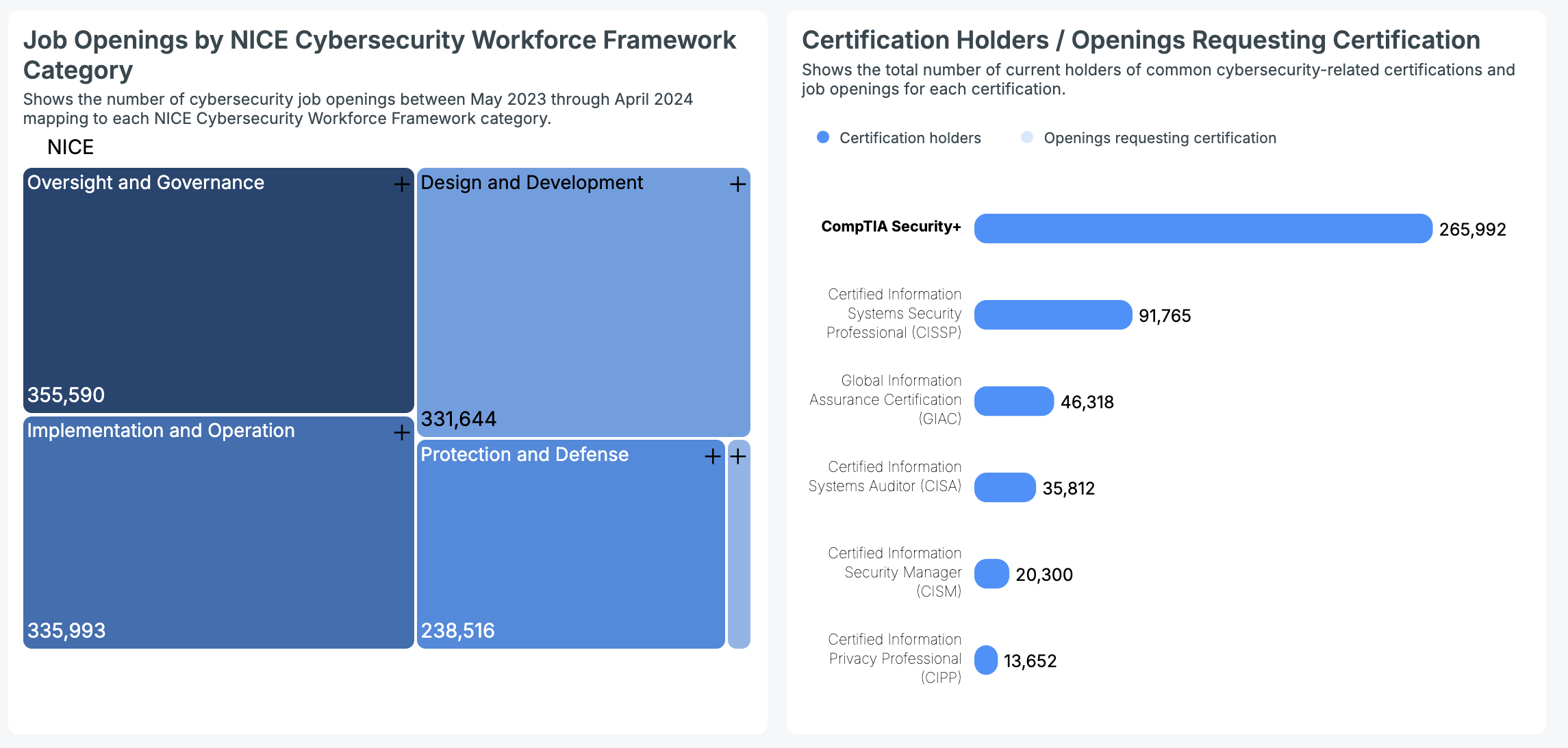
These programs typically focus on hands-on skills aligned with widely recognized certifications such as:
- CompTIA Security+
- Certified Information Systems Security Professional (CISSP)
- Certified Ethical Hacker (CEH)
Campus-based cybersecurity certifications
Lord Fairfax Community College
Middletown, VirginiaProgram: Cybersecurity and Networking Foundations Certificate
Credits: 16-17
Cost per credit: $159 in state | $335 out of state
Delivery Method: Campus
Learn more: Program detailsMarymount University
Arlington, VirginiaProgram: Cybersecurity Certificate
CAE designation: CAE-CD
Credits: 12
Cost per credit: $1,275
Delivery Method: Campus
Learn more: Program detailsSouthwest Virginia Community College
Richlands, VirginiaProgram: Cybersecurity Fundamentals Career Studies Certificate
CAE designation: CAE-CD
Credits: 29
Cost per credit: $163 in state | $363 out of state
Delivery Method: Campus, Online
Learn more: Program detailsThomas Nelson Community College
Hampton, VirginiaProgram: Cybersecurity and Networking Foundations - Career Studies Certificate
Credits: 15
Cost per credit: $161 in-state | $337 out of state
Delivery Method: Campus, Online
Learn more: Program detailsTidewater Community College
Norfolk, VirginiaProgram: Cybersecurity and Networking Foundation Career Studies Certificate
CAE designation: CAE-CD
Credits: 24
Cost per credit: $161 in-state | $337 out of state
Delivery Method: Campus
Learn more: Program detailsWytheville Community College
Wytheville, VirginiaProgram: Cybersecurity and Networking Certificate
Credits: 16
Cost per credit: $159 in-state | $335 out of state
Delivery Method: Campus
Learn more: Program details
Online cybersecurity certifications
Danville Community College
Danville, VirginiaProgram: Certificate in Cyber Security
Credits: 40
Cost per credit: $241
Delivery Method: Online
Learn more: Program detailsOld Dominion University
Norfolk, VirginiaProgram: Cyber Risk Management Certificate
CAE designation: CAE-CO, CAE-R
Credits: 18
Cost per credit: $599 in state | $1439 out of state
Delivery Method: Online
Learn more: Program detailsRadford University
Radford, VirginiaProgram: Cybersecurity Certificate
CAE designation: CAE-CD
Credits: 18
Cost per credit: $296 in state | $578 out of state
Delivery Method: Online
Learn more: Program detailsSouthwest Virginia Community College
Richlands, VirginiaProgram: Cybersecurity Fundamentals Career Studies Certificate
CAE designation: CAE-CD
Credits: 29
Cost per credit: $163 in state | $363 out of state
Delivery Method: Campus, Online
Learn more: Program detailsThomas Nelson Community College
Hampton, VirginiaProgram: Cybersecurity and Networking Foundations - Career Studies Certificate
Credits: 15
Cost per credit: $161 in-state | $337 out of state
Delivery Method: Campus, Online
Learn more: Program details
Bootcamps in Virginia
Only one university offers a cybersecurity bootcamp program where students can acquire the necessary skills to combat cybercrime and potentially land a job in the rapidly expanding cybersecurity industry.
University of Richmond Boot Camps
Richmond, VirginiaProgram: Cybersecurity Boot Camp
Length: 24 Weeks
Cost: $11,995
Delivery Method: Online
Learn more: Program details
Scholarship for Service (SFS)
Virginia institutions participate in the National Science Foundation Scholarship for Service (SFS) program, which provides funding for cybersecurity students in exchange for post-graduation service in federal, state, local, or tribal government roles.
The program supports tuition, stipends, and cybersecurity workforce development through universities designated as NSA/DHS Centers of Academic Excellence.
SFS participation helps strengthen the pipeline of cybersecurity professionals entering public-sector roles.
Unique state cybersecurity initiatives
Virginia maintains several statewide cybersecurity initiatives that support workforce development and academic partnerships.
The Virginia Information Technologies Agency (VITA) oversees statewide cybersecurity governance and works with public-sector organizations and educational institutions to strengthen cyber workforce capabilities across state government.
The state also supports collaboration between universities, research centers, and government agencies to expand cybersecurity education, research, and training programs aligned with national security needs.
These initiatives often include partnerships with universities, research labs, and workforce training programs designed to strengthen the cybersecurity talent pipeline.
Frequently asked questions about cybersecurity degrees in Virginia
CyberSeek reports that Virginia has one of the largest cybersecurity workforces in the United States, with tens of thousands of cybersecurity professionals employed statewide and thousands of annual job postings. These figures represent job demand signals rather than total employment counts.
The U.S. Bureau of Labor Statistics reports that Information Security Analysts in Virginia earn an average annual wage exceeding $120,000, reflecting strong demand for cybersecurity expertise in the state’s government and defense sectors.
There is no single “best” cybersecurity degree. Students should look for programs with:
– NSA/DHS Centers of Academic Excellence designation
– hands-on cyber labs or cyber ranges
– industry or government partnerships
– internship opportunities with technology or defense employers
Yes. Many Virginia universities and colleges offer online or hybrid cybersecurity degree programs, especially at the master’s and certificate levels.
Several universities and continuing education programs offer short-term cybersecurity training and certificate programs designed to prepare students for professional certifications.
Employers frequently request certifications such as:
– CompTIA Security+
– CISSP
– Certified Ethical Hacker (CEH)
Certification demand varies by role and experience level, with entry-level positions often requiring Security+.
Yes. Virginia’s proximity to federal agencies and defense contractors creates sustained demand for cybersecurity professionals across government, consulting, and private-sector organizations.
Yes. Many students begin with an associate degree in cybersecurity or information technology and later transfer into bachelor’s programs to complete their education.
– Associate degree: about 2 years
– Bachelor’s degree: about 4 years
– Master’s degree: about 1–2 years
Yes. Several Virginia universities participate in the NSF Scholarship for Service program, which funds cybersecurity education in exchange for government service after graduation.
– Federal government agencies
– Defense contractors
– Consulting and technology firms
– Financial services and healthcare organizations
– Security analyst
– SOC analyst
– Network security technician
– Cybersecurity specialist
Sources
- CyberSeek | Cybersecurity Supply and Demand Heat Map | Accessed March 5, 2026
- U.S. Bureau of Labor Statistics | Occupational Employment and Wage Statistics | Accessed March 5, 2026
- Virginia Labor Market Information | Workforce Data and Employment Projections | Accessed March 5, 2026
- Virginia Information Technologies Agency (VITA) | Cybersecurity Governance and Services | Accessed March 5, 2026
- National Security Agency / DHS | National Centers of Academic Excellence in Cyber Defense | Accessed March 5, 2026
- National Science Foundation / OPM | Scholarship for Service (CyberCorps®) Program | Accessed March 5, 2026
- Virginia Tech | Hume Center for National Security and Technology | Accessed March 5, 2026