- Associate degree
- Bachelor’s degree
- Master’s degree
- Cybersecurity certifications
- Cybersecurity initiatives in SD
- FAQs
Students pursuing a cybersecurity degree in South Dakota can choose from a range of academic pathways including associate, bachelor’s, and graduate-level programs offered through colleges and universities.
This guide emphasizes degree and school pathways and references institutions only when they offer distinctive workforce partnerships, research initiatives, or training environments beyond a standard degree listing.
How we keep this page current
This page is updated using CyberSeek for state-level demand signals, the U.S. Bureau of Labor Statistics (BLS) for statewide wage and employment estimates, the South Dakota Department of Labor and Regulation (DLR) Labor Market Information Center for occupational projections and wage publications, the South Dakota Bureau of Information & Telecommunications (BIT) for statewide cybersecurity policy context, and NSF CyberCorps®: Scholarship for Service (SFS) for scholarship participation.
Program and initiative claims are verified against official institutional or state pages, and we review the page periodically to update or remove time-sensitive statements.
Ad
cybersecurityguide.org is an advertising-supported site. Clicking in this box will show you programs related to your search from schools that compensate us. This compensation does not influence our school rankings, resource guides, or other information published on this site.
Featured Cybersecurity Degree Programs
| School Name | Program | More Info |
|---|---|---|
| Purdue Global | Online BS in Cybersecurity | website |
| UC Berkeley School of Information | Master’s in Cybersecurity | No GRE/GMAT Required | website |
| Arizona State University | Online MA in Global Security - Cybersecurity | website |
| Southern New Hampshire University | Online BS in Cybersecurity or Online MS in Cybersecurity | website |
Cybersecurity workforce demand in South Dakota
CyberSeek provides a South Dakota view of cybersecurity demand using online job postings and supply/demand indicators (a demand signal, not an official employment count). See the state view on the CyberSeek heat map.
For longer-term planning, the South Dakota DLR’s statewide occupational projections estimate Information Security Analysts will grow from 709 jobs to 977 jobs in South Dakota (a 37.80% increase), with 31 average annual openings during the projection period.
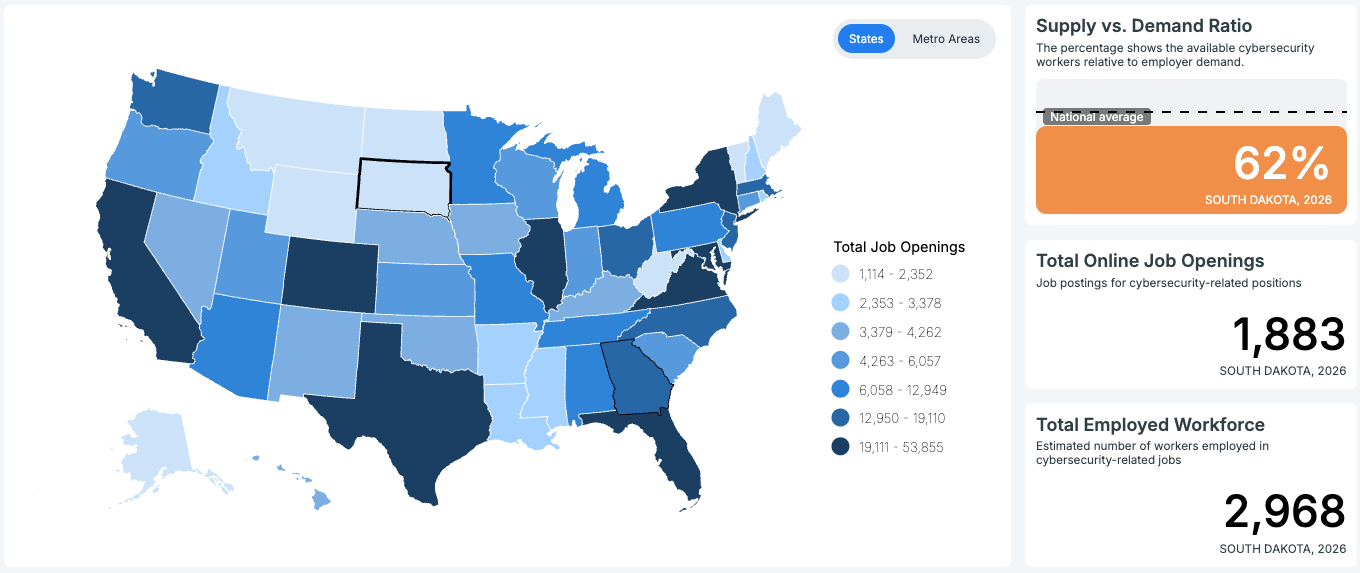
For wages and current employment estimates, the BLS OEWS statewide table for South Dakota (May 2023) reports 500 Information Security Analysts employed with an annual mean wage of $102,240. As a cyber-adjacent comparison, BLS reports 1,010 Computer Systems Analysts employed in South Dakota with an annual mean wage of $99,350.
What these metrics do (and don’t) mean: CyberSeek reflects posting activity (hiring signals), BLS OEWS reflects employment and wages (filled jobs and pay estimates), and DLR projections estimate future growth and openings—so the numbers should be used together for context, not treated as the same thing.
Related resources
Cybersecurity degree pathways in South Dakota
South Dakota’s cybersecurity education pathways range from foundational programs designed for quick workforce entry to advanced degrees tied to hands-on labs, research, and public-sector partnerships.
Associate degrees
Associate degrees (often 2 years) can be a practical route into IT support, networking, and security-adjacent roles—especially when paired with certifications.
What to look for:
- Clear transfer options into bachelor’s programs
- Lab-based networking and systems coursework
- Security fundamentals aligned to common entry certifications (e.g., Security+)
Lake Area Technical Institute
Watertown, SD Program: Associate of Applied Science in Computer Information Systems – Networking and Cyber Security Specialist
Credits: 70
Cost per credit: $124
Delivery method: Campus, Online
Program highlights:- Practical Training: Students practice in labs to get ready for real-world challenges.
- Earn Certificates: The program prepares students for several IT certifications.
- University Partnerships: After the program, students can continue their studies at partner universities.
Southeast Technical Institute
Sioux Falls, SDProgram: Associate Degree in System and Network Security
Credits: 68
Cost per credit: $255
Delivery method: Campus, Hybrid
Program highlights:- Job Role: Students learn to plan security measures and manage computer systems.
- Skills: They'll learn to set up firewalls, handle security issues, and improve system performance.
- Scholarship: There's a full scholarship available called Build Dakota.
Dakota State University
Madison, SDProgram: Associate of Science in Network and Security Administration
CAE designation: CAE-CD, CAE-R, CAE-CO
Credits: 60
Cost per credit: $295 in state | $398 out of state
Delivery method: Campus, Online
Program highlights:- Practical Learning: Students use labs to practice real tech tasks.
- Learn from the Best: The teachers are experts in their field.
- Further Study: Credits can be used for a higher degree.
National American University-Rapid City
Rapid City, SDProgram: Information Technology Online Associate Degree
Credits: 93
Cost per credit: $380
Delivery method: Online
Program highlights:- What's It About? It covers important IT areas like web development, computer security, and networking.
- Jobs After Graduation: Helping with computer issues, analyzing and managing network systems.
- Quick Takeaway: The degree prepares you for real IT certifications.
Bachelor’s degrees
Bachelor’s programs (often 4 years) are a common credential for entry-level analyst roles and for building the foundation needed for security engineering or forensics tracks.
A distinctive initiative in South Dakota is Dakota State University (DSU), which holds all three NSA National Centers of Academic Excellence designations—Cyber Defense (CAE-CD), Cyber Operations (CAE-CO), and Cyber Research (CAE-R)—and documents these designations on its official CAE page.
DSU also operates Madison Cyber Labs (MadLabs®), a cybersecurity research and development hub used for applied research and workforce development activities.
Dakota State University
Madison, SDProgram: BS in Cyber Operations
CAE designation: CAE-CD, CAE-R, CAE-CO
Credits: 120
Cost per credit: $295 in state | $396 out of state (Campus) | $356 in-state | $465 out-of-state (Online)
Delivery method: Campus, Online
Program highlights:- Activities: Students can join contests like the ACM Programming and National Cyber League.
- Scholarship: DSU offers a scholarship for cyber students, covering tuition and giving a $25,000 yearly stipend.
- NSA Approval: DSU's program is recognized by the National Security Agency (NSA) as a top cyber education center.
Dakota State University
Madison, SDProgram: Bachelor of Science in Cyber Leadership and Intelligence
CAE designation: CAE-CD, CAE-R, CAE-CO
Credits: 120
Cost per credit: $295 in state | $396 out of state (Campus) | $356 in-state | $465 out-of-state (Online)
Delivery method: Campus, Online
Program highlights:- Unique Course: The CLI program is one of a kind, blending leadership skills with cyber knowledge.
- Military Benefits: Military members can join this program easily, with lower fees and special scholarships.
- Job Opportunities: Students can do internships and are trained for jobs like cyber investigator or intelligence officer.
Dakota State University
Madison, SDProgram: Bachelor of Science in Network and Security Administration
CAE designation: CAE-CD, CAE-R, CAE-CO
Credits: 120
Cost per credit: $295 in state | $396 out of state (Campus) | $356 in-state | $465 out-of-state (Online)
Delivery method: Campus, Online
Program highlights:- Practical Labs: Students can practice tech skills in real-world-like settings.
- Join Tech Clubs: There are clubs and events for more learning and fun.
- Job Ready: Graduates can get jobs like System Administrator or Penetration Tester.
Master’s degrees
Master’s programs (often 1–2 years) are commonly used by:
- IT professionals moving into security leadership or architecture
- Students targeting advanced technical areas (forensics, malware analysis, applied research)
- Career changers with a technical undergraduate background
When comparing options, prioritize:
- Research labs or applied institutes that connect students to employers or public-sector partners
- A capstone or practicum tied to real systems and realistic threat scenarios
Dakota State University
Madison, SDProgram: Master of Science in Cyber Defense
CAE designation: CAE-CD, CAE-R, CAE-CO
Credits: 30
Cost per credit: $471 in state | $581 out of state
GRE/GMAT Required: Not Required
Delivery method: Online
Program highlights:- Program Goals: The course aims to teach students how to stop cyberattacks, handle security incidents, and keep data safe.
- Awards & Recognition: The university is highly regarded in cybersecurity and has received top awards from national agencies.
- Teachers: The program has a strong team of professors.
Certifications and workforce programs
Certificates and short-term programs can complement degrees, particularly for students seeking:
- Faster entry into security-adjacent roles
- Credential stacking alongside an associate or bachelor’s degree
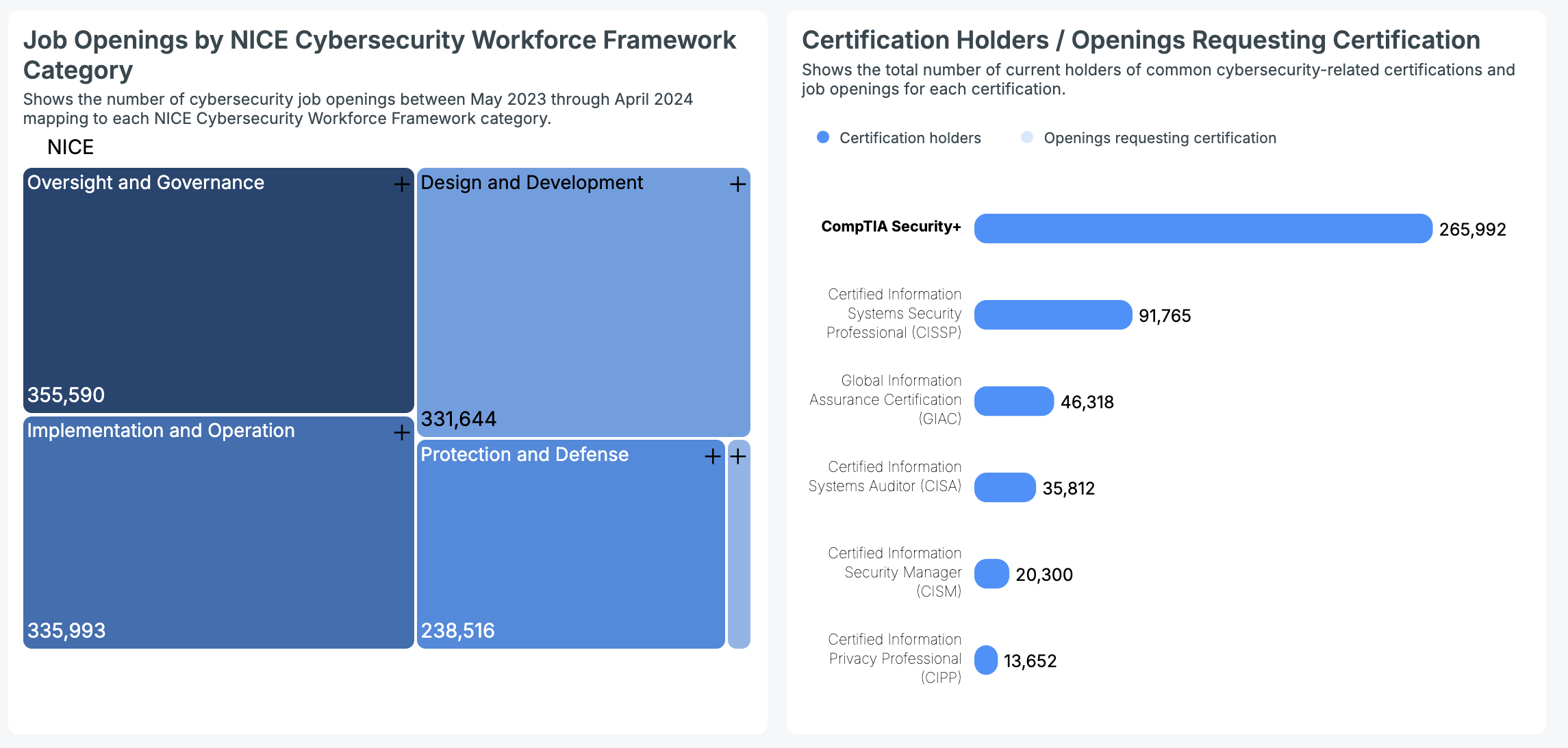
CyberSeek can help students understand typical skill clusters and role progressions so certificate choices stay aligned to employer demand.
South Dakota also publishes state wage tables that can help students calibrate expectations when comparing entry-level vs. advanced roles.
Dakota State University
Madison, SDProgram: Graduate Certificate in Banking Security
CAE designation: CAE-CD, CAE-R, CAE-CO
Credits: 9
Cost per credit: $471 in state | $581 out of state
Delivery method: Campus, Online
Program highlights:- Program Content: Students learn practical skills to protect computer networks, online apps, and wireless systems in banks.
- Expert Teachers: The course is taught by well-known professionals in cybersecurity.
- Job Opportunities: This certificate can lead to jobs like Security Analyst or Audit Support Professional.
Dakota State University
Madison, SDProgram: Graduate Certificate in Cybersecurity
CAE designation: CAE-CD, CAE-R, CAE-CO
Credits: 12
Cost per credit: $471 in state | $581 out of state
Delivery method: Campus, Online
Program highlights:- Online Safety: The course highlights the importance of protecting the digital world, especially as more devices connect online.
- Practical Skills: Students learn about online safety tools like encryption and how to spot and handle cyber threats.
- Job Prospects: After finishing, students can aim for jobs like software engineer or security analyst. The certificate can also help in getting promotions in tech roles.
Scholarship for Service (SFS)
The NSF CyberCorps®: Scholarship for Service (SFS) program provides scholarships for cybersecurity students who commit to working in government after graduation.
For South Dakota, the official SFS participating institutions directory lists Dakota State University as a participating institution and links to DSU’s program page.
Unique state cybersecurity initiatives
South Dakota’s statewide cybersecurity policy context is centralized through the Bureau of Information & Telecommunications (BIT), which publishes state cybersecurity resources and security policy guidance.
- BIT maintains a public cybersecurity resource landing page intended to support secure practices across organizations and users.
- BIT also publishes an Information Technology Security Policy describing statewide cybersecurity expectations for state IT environments (including guidance and references to required procedures).
University-affiliated initiatives that support community or workforce pipelines (examples with primary sources):
- DSU MadLabs operates SecureSD, a program that supports municipalities and counties in improving their cybersecurity posture (a community-facing pipeline for applied work).
- DSU MadLabs operates DigForCE, a digital forensics support program for law enforcement (relevant to forensics-oriented student pathways).
Frequently asked questions about cybersecurity degrees in South Dakota
BLS reports 500 Information Security Analysts employed in South Dakota (May 2023). CyberSeek also provides posting-based demand indicators for the state.
BLS reports an annual mean wage of $102,240 for Information Security Analysts in South Dakota (May 2023).
There isn’t one universal “best.” For many entry-level security roles, a bachelor’s degree plus internships/labs is a common path, while associate + certifications can work for security-adjacent roles. If you want research, cyber operations, or specialized labs, look for programs with documented applied facilities and partnerships.
Some South Dakota institutions offer online or hybrid options, but formats change. Confirm modality, accreditation, and required in-person components directly on the institution’s official program pages.
Short-term certificate programs and workforce training options exist (often through colleges and workforce partners). Use CyberSeek role/pathway tools to keep short-term training aligned to actual job requirements.
Certification demand varies by employer and seniority. CyberSeek provides posting-based signals and pathway context that can help you prioritize common certifications by role.
South Dakota DLR projections estimate Information Security Analysts will grow from 709 (2022) to 977 (2032) with 31 average annual openings.
Yes. Associate degrees can be a strong entry point into IT and security-adjacent roles, especially when paired with certifications and a clear plan to build experience through labs and internships.
Typical timelines are: associate (2 years), bachelor’s (4 years), master’s (1–2 years), though transfer credits and part-time enrollment can change the timeline.
Yes—South Dakota has an SFS participating institution listed in the official directory (Dakota State University).
Cybersecurity roles exist across government, healthcare, finance, education, and professional services. Students interested in public-sector cybersecurity should review statewide cybersecurity policy context through BIT.
Entry-level roles often include SOC analyst, junior security analyst, and IT security specialist. CyberSeek’s pathway tools can help map common entry roles and skill progressions.
Sources
- CyberSeek | Cybersecurity Supply/Demand Heat Map | Accessed March 3, 2026
- U.S. Bureau of Labor Statistics | Occupational Employment and Wage Statistics: SD (May 2023) | Accessed March 3, 2026
- South Dakota Department of Labor and Regulation | Occupational Projections 2022–2032 | Accessed March 3, 2026
- South Dakota DLR, Labor Market Information Center | Statewide Occupational Wages (2024 wage data) | Accessed March 3, 2026
- South Dakota Bureau of Information & Telecommunications (BIT) | Cybersecurity Landing Page — Accessed March 3, 2026
- South Dakota BIT | Information Technology Security Policy | Accessed March 3, 2026
- CyberCorps®: Scholarship for Service (OPM/NSF) | Program Site | Accessed March 3, 2026
- CyberCorps®: Scholarship for Service (OPM/NSF) | Participating Institutions | Accessed March 3, 2026
- Dakota State University | CAE Designations | Accessed March 3, 2026
- Dakota State University | Madison Cyber Labs (MadLabs®) | Accessed March 3, 2026
- DSU MadLabs | SecureSD | Accessed March 3, 2026
- DSU MadLabs | DigForCE | Accessed March 3, 2026