- Associate degree
- Bachelor’s degree
- Master’s degree
- Cybersecurity certifications
- Cybersecurity in North Dakota
- FAQs
This guide contains information about cybersecurity schools in North Dakota and related cybersecurity training information.
In 2019, the state’s network, StageNet, supported 252,000 daily users and held the state’s military and economic footprint in the energy and agriculture sectors. North Dakota faces about 5.7 million attacks per month, and thus, the state has since adjusted its priorities.
Initially capitalizing on agriculture and energy as its key industries, North Dakota’s major initiatives for the upcoming years focus on high reliance on IT services.
Since 2016, Governor Doug Burgum has made information technology and cybersecurity a significant part of the state’s agenda, focusing on bridging the gaps between consumers, enterprises, and adjacent industries.
Ad
cybersecurityguide.org is an advertising-supported site. Clicking in this box will show you programs related to your search from schools that compensate us. This compensation does not influence our school rankings, resource guides, or other information published on this site.
Featured Cybersecurity Degree Programs
| School Name | Program | More Info |
|---|---|---|
| Purdue Global | Online BS in Cybersecurity | website |
| Grand Canyon University | Online BS in Cybersecurity or Online MS in Cybersecurity | website |
| UC Berkeley School of Information | Master’s in Cybersecurity | No GRE/GMAT Required | website |
| Arizona State University | Online MA in Global Security - Cybersecurity | website |
| Southern New Hampshire University | Online BS in Cybersecurity or Online MS in Cybersecurity | website |
Growing awareness of cybersecurity in North Dakota

Governor Burgum signed into law Senate Bill 2110 to protect the state’s digital infrastructure and bring a unified approach to the growing threat of cybersecurity attacks.
The bill turns over authority to the state’s Information Technology Department to help define and reinforce cybersecurity measures for all public entities, including counties, cities, rural areas, schools, and higher education institutions.
Burgum also initiated the idea of a new office to support the IT department to assist in cybersecurity efforts. The signed bill also reinforces the Governor’s request for $174 million for 24 information technology infrastructure projects and $16.4 million for cybersecurity consolidation efforts in the budget proposal.
North Dakota has stepped up its cybersecurity education efforts, launching the PK-20W program, partnering with National Integrated Cyber Education Center (NICERC), and working with companies like Microsoft to train teachers in cybersecurity.
Teachers under the program can create curricula for all school districts to educate students in the latest cybersecurity methods of protection and inspire new careers in cybersecurity. The K-20W program also reaches out to colleges to initiate new curricula, and to the North Dakota workforce alongside 40 statewide organizations.
North Dakota’s major initiatives contain small-scale projects, such as the State Cybersecurity Task Force in 2015, to combat cybersecurity threats by building new policies and using monitoring tools.
North Dakota citizens can take the ND Cybersecurity Awareness Training module to learn how to protect themselves from cyberattacks, and they can enroll in the Cyber Program from the North Dakota State and Local Intelligence Center for resources and education
Related resources
Cybersecurity organizations in North Dakota:
- Defend ND – A division of North Dakota Information Technology focused on state cybersecurity operations and strategies, including the use of AI for enhanced effectiveness
- DefeND Campaign – A cybersecurity outreach initiative by North Dakota Information Technology to protect against increasing cyber threats, particularly in light of the COVID-19 pandemic
- Cyber Threat Alliance (CTA) – North Dakota Information Technology has partnered with this nonprofit organization to improve global digital ecosystem security
- North Dakota State and Local Intelligence Center (NDSLIC) – This center runs a Cyber Program for threat analysis, intelligence provision, and cybersecurity awareness promotion for state critical infrastructure
- North Dakota Statewide Cybersecurity Strategy – Following the signing of Senate Bill 2110, North Dakota has a unified approach to cybersecurity across all levels of state government
Cybersecurity education in North Dakota
North Dakota’s efforts to confront cybersecurity incidents have led to a handful of higher-level degrees and certificates to materialize, allowing its students who have been introduced to cybersecurity through the K-20W program to continue their education in cybersecurity.
Due to the Governor’s increase in budget spending in the IT industry, students who desire a degree in cybersecurity can attain a cybersecurity degree and potentially work for public sector companies and government facilities.
Cybersecurity associate degrees in North Dakota
Associate degrees teach students programming, data analysis, and data encryption, as well as project management for cybersecurity.
Bismarck College’s program highlights key foundations such as configuring networks, managing servers, securing operating systems, basic programming, and maintaining security practices, and offers the option to take certifications in Linux+, CCNA, and Security+.
Bismarck State College
Bismarck, ND Program: Associate in Applied Science in Cybersecurity & Computer Networks
CAE designation: CAE-CD
Credits: 60-64
Cost per credit: $174 in state | $304 out of state
Delivery method: Campus, Online
Program highlights:- What It's About: Teaches students about computer security and how computers talk to each other.
- Study: They use real-life examples to teach, and the program keeps changing to keep up with the world.
- Jobs You Can Get After: After finishing, students can work with computers and computer security for many companies.
Cybersecurity bachelor’s degrees in North Dakota
The cybersecurity bachelor’s degree curriculum often includes topics such as information systems, network security, web development, and cryptography to interpret and act on software and networking issues.
At Bismarck College, students can earn a Bachelor of Science degree in cybersecurity and information technology, which focuses on advanced techniques in configuring networks and developing software protections.
Bismarck State College
Bismarck, NDProgram: Bachelor of Applied Science in Cybersecurity and Information Technology
CAE designation: CAE-CD
Credits: 123-127
Cost per credit: $174 in state | $304 out of state
Delivery method: Campus, Online
Program highlights:- About the Program: Teaches students how to protect and manage digital data.
- Courses: The course content is updated based on feedback from cybersecurity professionals.
- Jobs After Graduation: Jobs include roles like Security Analyst, Network Analyst, and Systems Manager.
Minot State University
Minot, NDProgram: Bachelor of Science in Cybersecurity and Operations
CAE designation: CAE-CD
Credits: 123
Cost per credit: $354
Delivery method: Campus, Online
Program highlights:- About the Program: This course teaches students how to protect computers and data from online threats.
- Courses: It mixes classroom learning with hands-on experience.
- Job Opportunities: Jobs in this field include roles like Security Architect, Penetration Tester, and Security Engineer.
North Dakota State University
Fargo, NDProgram: B.S. in Computer Science - Cybersecurity Focus
CAE designation: CAE-R
Credits: 121
Cost per credit: $358 in state | $537 out of state
Delivery method: Campus
Program highlights:- Courses: They offer a wide range of subjects, including artificial intelligence, machine learning, and data science.
- Real-world Experience: Students get hands-on experience through internships and a special end-of-year project.
- Job Opportunities: Many graduates find jobs in top tech companies like Apple, Google, and Microsoft.
Rasmussen College-North Dakota
Fargo, NDProgram: Bachelor's Degree in Cyber Security
Credits: 90
Cost per credit: $279
Delivery method: On-campus, Online
Program highlights:- Job Certifications: The program gets students ready for important job tests in cyber security.
- Career Boost: The course helps students get better jobs in computer security.
- Cost and Help: The university has ways to make the course cheaper, like scholarships and credits for what students already know.
University of Mary
Bismarck, NDProgram: Bachelor of Science in Cyber Security Administration
Credits: 124
Cost per credit: $867
Delivery method: Campus, Online
Program highlights:- Quality: The program is internationally recognized for its quality.
- Skills: Learn to build and manage secure IT systems and solve business issues.
- Career Ready: Prepares students for IT jobs in today's digital business world.
Online bachelor’s degree
University of North Dakota
Grand Forks, NDProgram: Bachelor of Science in Cyber Security
Credits: 120
Cost per credit: $449 in state | $503 out of state
Delivery method: Campus, Online
Program highlights:- Nature of the Program: It's a blend of tech training with a touch of arts, making students well-rounded.
- Why It's Relevant: There's a big demand for cybersecurity experts. As cyber threats grow, so do job opportunities and salaries in this field.
- Recognition: UND's online version of this degree is known for its quality and affordability.
Bismarck State College
Bismarck, NDProgram: Bachelor of Applied Science in Cybersecurity and Information Technology
CAE designation: CAE-CD
Credits: 123-127
Cost per credit: $174 in state | $304 out of state
Delivery method: Campus, Online
Program highlights:- Courses: Students learn about firewalls, cloud computing, networking, and data security.
- Jobs After Graduation: Graduates can work in IT, cybersecurity, or in specialized centers for network and security operations.
- Certificates: The program offers specialized training in areas like hacking, networking, and secure programming.
Minot State University
Minot, NDProgram: Bachelor of Science in Cybersecurity and Operations
CAE designation: CAE-CD
Credits: 123
Cost per credit: $354
Delivery method: Campus, Online
Program highlights:- Topics: Students will study topics like hacking for good (ethical hacking), protecting networks, and understanding malware.
- High Demand: Many cybersecurity jobs are available right now.
- Quality Education: The university's program is recognized by the Higher Learning Commission.
University of Mary
Bismarck, NDProgram: Bachelor of Science in Cyber Security Administration
Credits: 124
Cost per credit: $480
Delivery method: Campus, Online
Program highlights:- Goal: Train students for IT jobs, from tech giants to small business consultants.
- Jobs After: Roles like Systems Admin, Database Admin, Security Analyst, and more.
- Skills: Learn about computer systems, online labs, cyber defense, and ethical system management.
Rasmussen College
Fargo, NDProgram: Bachelor's Degree in Cyber Security
Credits: 90
Cost per credit: $280
Delivery Method: On-campus, Online
Learn more: Program details
Cybersecurity master’s degrees in North Dakota
Master’s degrees narrow skills in select areas such as current digital trends of protection and cybersecurity-related leadership, and up-to-date management skills in network security.
Campus-based masters degree
North Dakota State University
Fargo, NDProgram: Master of Science (M.S.) in Software and Security Engineering
CAE designation: CAE-R
Credits: 32
Cost per credit: $421 in state | $632 out of state
GRE/GMAT Required: Not Required
Delivery method: Campus
Program highlights:- Complete Learning: The program teaches both software creation and safety.
- For Everyone: It's designed for students and professionals.
- Quality Focus: NDSU emphasizes making high-quality software.
Online masters degree
University of North Dakota
Grand Forks, NDProgram: Online Master of Science in Cyber Security
Credits: 36
Cost per credit: $866
GRE/GMAT Required: Not Required
Delivery method: Online
Program highlights:- Flexible Learning: Pick from topics like Ethical Hacking and Computer Forensics.
- Job Ready: The course gets you ready for real-world jobs and certain exams.
- Support: UND provides extra help with studies, including tutoring.
Minot State University
Minot, NDProgram: Master of Science in Information Systems
CAE designation: CAE-CD
Credits: 30
Cost per credit: $390
GRE/GMAT Required: Not Required
Delivery method: Online
Program highlights:- Cost: Affordable fees with financial help for some students.
- Time: Finish in as short as two semesters.
- Quality: Recognized by top education groups.
Cybersecurity certifications in North Dakota
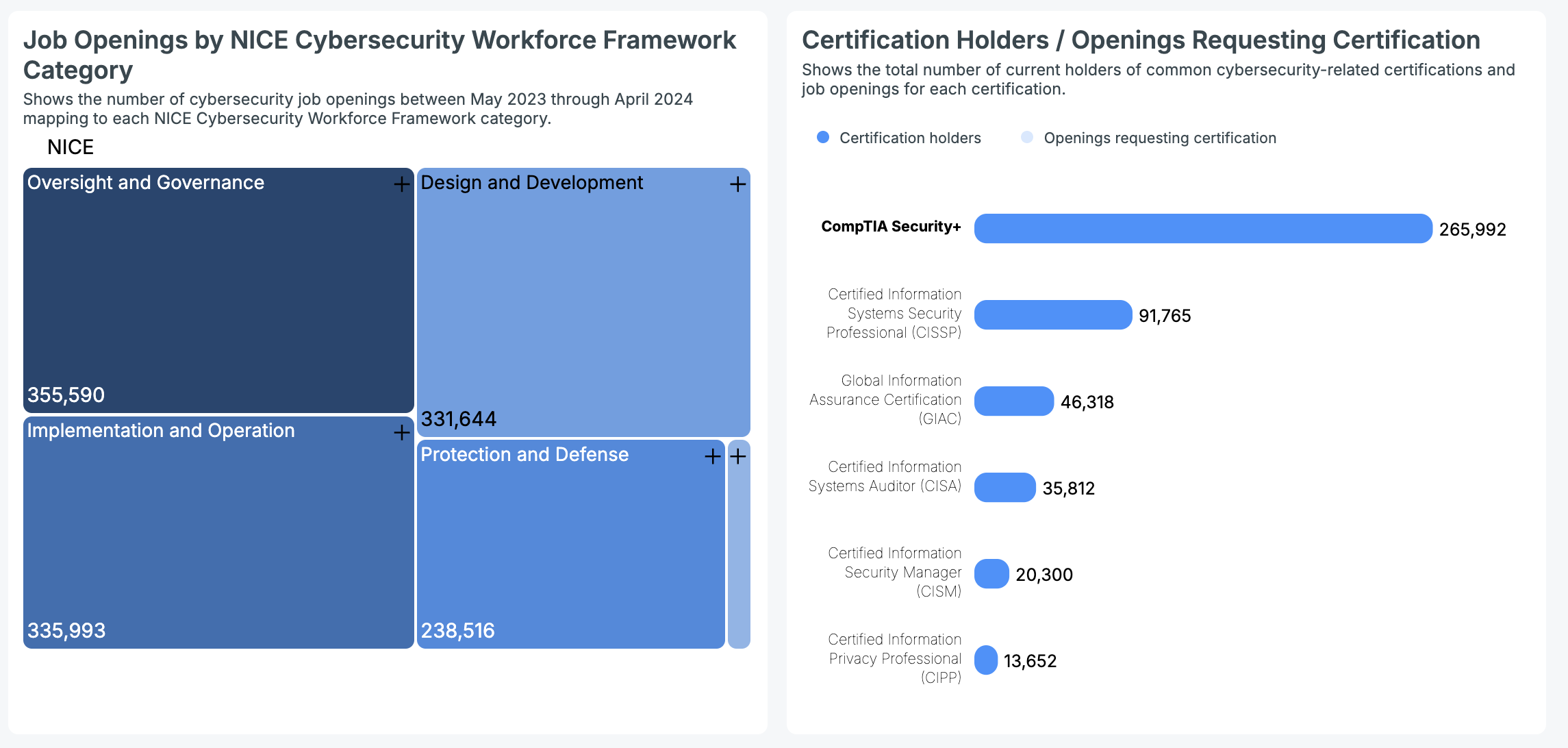
Based on Cyberseek’s comprehensive nationwide data, the current number of professionals holding common cybersecurity certifications is as follows:
- CompTIA Security+: 265,992 certified professionals
- CISSP: 91,765 certified professionals
- GIAC: 46,318 certified professionals
- CISA: 35,812 certified professionals
- CISM: 20,300 certified professionals
- CIPP: 13,652 certified professionals
Here’s a list of school/university that offer cybersecurity certifications in North Dakota:
Minot State University
Minot, NDProgram: Graduate Certificate Program: Cybersecurity
CAE designation: CAE-CD
Credits: 12
Cost per credit: $390
Delivery method: Campus
Program highlights:- Program: Primarily focused on management and special education.
- Courses: Designed as concentrated courses of study that necessitate specific graduate credits.
Minot State University
Minot, NDProgram: Graduate Certificate Program: Cybersecurity Management
CAE designation: CAE-CD
Credits: 9
Cost per credit: $390
Delivery method: Campus
Program highlights:- Focus Areas: Management and special education.
- Program: Intensive courses of study that require specific graduate credits.
North Dakota State College of Science
Wahpeton, NDProgram: Certificate in IT Forensics and Security
Credits: 37
Cost per credit: $156 in state | $273 out of state
Delivery method: Campus, Hybrid
Program highlights:- About the Program: This certificate teaches professionals how to protect information systems from threats and handle IT security incidents.
- Goals: The program offers a comprehensive introduction to IT Forensics and CyberSecurity, emphasizing their ethical and legal aspects.
- Outcome: Successful students get a certificate in IT Forensics and CyberSecurity.
Cybersecurity jobs in North Dakota
Across the United States, cybersecurity demand was high from May 2023 to April 2024.
Oversight and Governance saw 355,590 openings, Implementation and Operation had 335,993, and Design and Development totaled 331,644. Protection and Defense roles accounted for 238,516, with Investigation at 19,525.
With 1,383 job openings in North Dakota, about 2,142 employees currently work in the cybersecurity industry, according to Cyberseek.
Further evaluation from Cyberstates about the cybersecurity field in North Dakota is the following:
- North Dakota’s tech sector generates an estimated $1.9 billion, about 3.1 percent of the overall economy, and houses more than 1,504 tech business enterprises.
- Currently containing an estimated 14,117 tech workers, the average tech industry salary in North Dakota is $75,321, compared to the state’s average annual private-sector wage of 60 percent.
The average hourly salary for a cybersecurity analyst in North Dakota is $54.01, with the annual average wage at $112,330, according to the Bureau of Labor Statistics data.
Cybersecurity in North Dakota
North Dakota’s approach to cybersecurity brings massive changes to its landscape.
North Dakota’s government prompted a reshaping of its economic climate, encouraging tech enterprises to cooperate with its key industries and furthering cybersecurity curricula to higher education institutions and its current workforce.
The state’s steady shift from agriculture and energy to technology can potentially become the great equalizer between its reliance on resources, ultimately giving way to progress towards the digital age.
Frequently Asked Questions
The PK-20W program, developed with Microsoft and NICERC, equips teachers to integrate cybersecurity into K–12 and college curricula, helping inspire future cybersecurity careers.
Cybersecurity analysts in North Dakota earn about $54.01 per hour, or $112,330 annually, according to the Bureau of Labor Statistics (2025).
Yes. North Dakota State University offers a campus-based program, while the University of North Dakota and Minot State University both provide online master’s degrees.
It is critical. With agriculture, energy, and IT services at its core, the state faces nearly 5.7 million cyberattacks monthly, pushing cybersecurity to the top of the agenda.
CyberSeek reports about 1,383 job openings and 2,142 employed professionals, highlighting the demand for new talent in the state.
Yes. The University of North Dakota, Minot State University, and Bismarck State College all provide online cybersecurity degree options.
Cybersecurity bachelor’s programs are offered by Bismarck State College, Minot State University, North Dakota State University, Rasmussen College-ND, and the University of Mary.
Key groups include Defend ND, the DefeND campaign, the Cyber Threat Alliance (CTA), and the North Dakota State and Local Intelligence Center (NDSLIC).
Yes. Bismarck State College provides an associate program that covers networking, operating systems, data encryption, and certifications like Linux+, CCNA, and Security+.
Yes. The state offers the ND Cybersecurity Awareness Training module and the NDSLIC Cyber Program, which educate residents on safe digital practices.
Certifications are offered at Minot State University, North Dakota State University, and the North Dakota State College of Science, with pathways to CompTIA Security+, CISSP, and more.
Tech workers earn about $75,321 on average, significantly higher than the state’s overall private-sector wage, making cybersecurity an attractive career.
Governor Doug Burgum’s Senate Bill 2110 unified cybersecurity under the state IT department, allocating millions for infrastructure projects and cybersecurity strategy.
Yes. With government investment, strong university programs, and affordable living costs, North Dakota provides promising opportunities for cybersecurity professionals.
The tech industry generates about $1.9 billion annually, or 3.1% of the state’s economy, with over 14,000 tech workers employed across more than 1,500 businesses.