- Associate’s degree
- Bachelor’s degree
- Master’s degree
- Cybersecurity certifications
- Delaware Cybersecurity initiatives
- FAQs
Students researching cybersecurity education options in Delaware can find a range of college pathways tied to employer demand in finance, defense contracting, insurance, and healthcare.
This page is narrowly focused on degree and school pathways and references institutions only when they support distinctive workforce development, research, or hands-on training opportunities.
How we keep this page current
This content is reviewed using labor market data and program verification from CyberSeek, the U.S. Bureau of Labor Statistics, Delaware labor market data systems, state cybersecurity and IT offices, and the NSF Scholarship for Service program.
Institution-specific information is verified against official university initiatives or research center pages, and outdated, time-sensitive claims are removed during routine updates.
Ad
cybersecurityguide.org is an advertising-supported site. Clicking in this box will show you programs related to your search from schools that compensate us. This compensation does not influence our school rankings, resource guides, or other information published on this site.
Featured Cybersecurity Degree Programs
| School Name | Program | More Info |
|---|---|---|
| Southern New Hampshire University | Online BS in Cybersecurity or Online MS in Cybersecurity | website |
| UC Berkeley School of Information | Master’s in Cybersecurity | No GRE/GMAT Required | website |
| University of Maryland Global Campus | Online BS in Cyber Operations or Online BS in Cybersecurity Management & Policy | website |
| Purdue University Global | Online BS in Cybersecurity | website |
Cybersecurity workforce demand in Delaware
Cybersecurity workforce demand in Delaware reflects the state’s concentration of financial services firms, government agencies, and healthcare systems that require secure information systems.
According to CyberSeek, Delaware consistently records several hundred cybersecurity job postings annually. CyberSeek data reflects employer demand signals and job-posting activity rather than total employment.
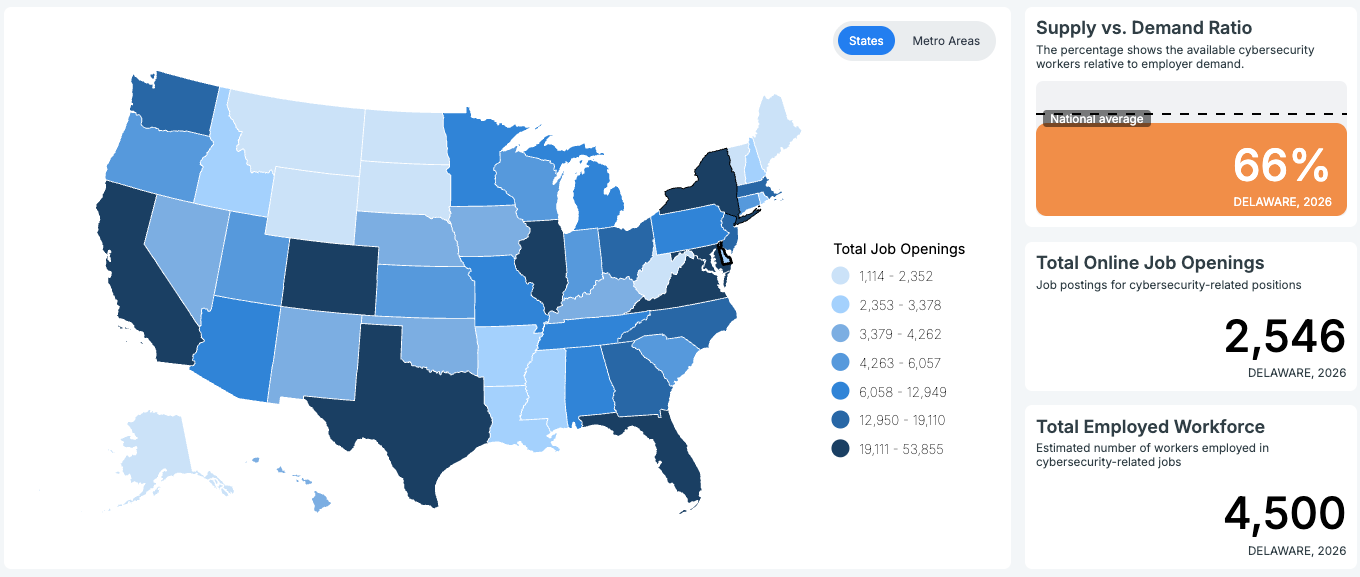
Labor market projections from the Delaware Department of Labor indicate continued growth in computer and mathematical occupations, including information security roles. However, the state does not publish a dedicated cybersecurity occupational category.
The U.S. Bureau of Labor Statistics reports that Information Security Analysts in Delaware earn a mean annual wage of about $120,000, with employment concentrated in finance, government, and professional services.
The BLS also reports employment and wage data for Network and Computer Systems Administrators, a closely related occupation with overlapping skill requirements and career pathways.
CyberSeek job-posting data and BLS employment estimates measure different aspects of the workforce: postings indicate employer hiring activity, while employment and wage estimates describe the size and compensation of the existing workforce.
Related resources
Cybersecurity degree pathways in Delaware
Delaware offers cybersecurity education through academic degrees and workforce training programs. Students can pursue local programs or online degrees while working in the state.
Associate degrees
Associate degrees typically provide foundational instruction in networking, system administration, and information security. These programs usually require about two years of study.
Students evaluating associate programs should look for:
- Hands-on technical labs
- Certification preparation opportunities
- Transfer pathways to bachelor’s programs
- Networking and operating systems coursework
Bachelor’s degrees
Bachelor’s degrees provide the most comprehensive preparation for cybersecurity careers and typically require four years of study.
The University of Delaware Center for Cybersecurity, Assurance and Privacy supports cybersecurity education through interdisciplinary research and workforce partnerships with government and industry. The center connects students with applied research and training opportunities related to cybersecurity and data protection.
Programs aligned with recognized cybersecurity education frameworks may provide preparation for industry certifications and technical career paths.
University of Delaware
Newark, Delaware Program: Cybersecurity Minor
CAE designation: CAE-CD
Credits: 126 (18 cybersecurity)
Cost per credit: $424 in-state | $1,139 out-of-state
Delivery Method: Campus
Learn more: Program details
Master’s degrees
Master’s-level cybersecurity programs prepare students for advanced technical and leadership roles.
Graduate programs often include:
- Secure systems design
- Digital forensics
- Risk management
- Cyber policy and governance
Students in Delaware frequently combine local or regional graduate programs with employer-sponsored training.
Campus-based master’s degree
University of Delaware
Newark, DelawareProgram: Master of Science in Cybersecurity
CAE designation: CAE-CD
Credits: 30
Cost per credit: $979
Delivery Method: Campus, Online
GRE/GMAT Required: Required
Learn more: Program details
Online cybersecurity master’s degree
University of Delaware
Newark, DelawareProgram: Online Master of Science in Cybersecurity
CAE designation: CAE-CD
Credits: 30
Cost per credit: $979
Delivery Method: Online
Learn more: Program detailsWilmington University
New Castle, DelawareProgram: Master of Science in Cybersecurity
CAE designation: CAE-CD
Credits: 36
Cost per credit: $1,536
Delivery Method: Online
Learn more: Program details
Certifications and workforce programs
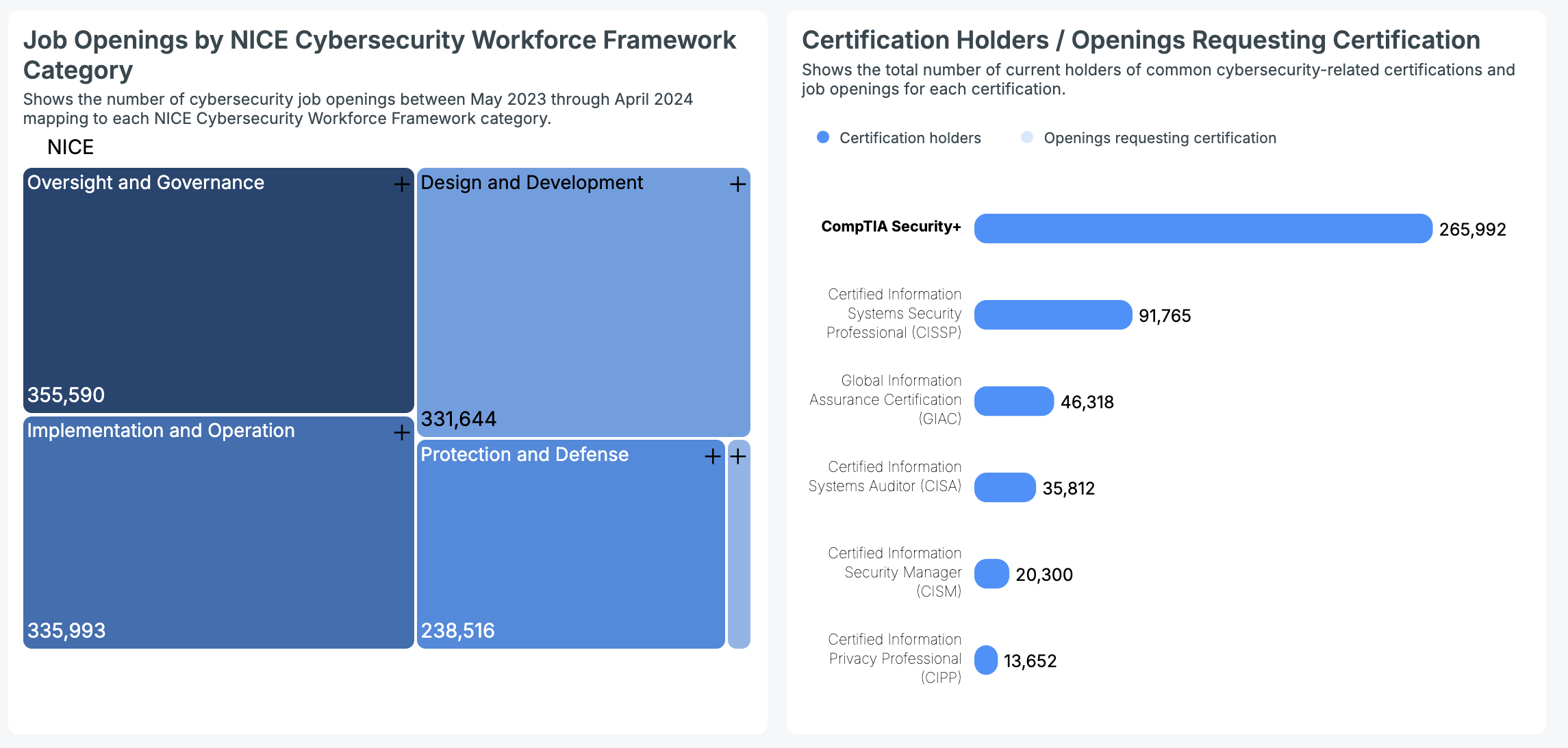
Short-term cybersecurity training and certification preparation programs provide alternative pathways into cybersecurity roles.
Common certifications include:
- CompTIA Security+
- Certified Information Systems Security Professional (CISSP)
- CompTIA Network+
The State of Delaware supports cybersecurity workforce development through statewide IT initiatives coordinated by the Delaware Department of Technology and Information, which helps align public-sector workforce needs with education programs.
Scholarship for Service
The federal Scholarship for Service (SFS) program provides funding for cybersecurity students who commit to government service after graduation.
Delaware institutions participating in SFS programs can be verified through the NSF Scholarship for Service program.
Unique Delaware cybersecurity initiatives
Statewide cybersecurity initiatives help shape cybersecurity education pathways in Delaware.
The Delaware Department of Technology and Information coordinates statewide cybersecurity strategy and workforce initiatives that support government cybersecurity operations and inform education and training priorities.
The University of Delaware Center for Cybersecurity, Assurance and Privacy conducts applied cybersecurity research and collaborates with government and industry partners, providing students with opportunities to participate in real-world cybersecurity projects.
These initiatives help connect academic programs with employers and public-sector cybersecurity needs.
Frequently asked questions about cybersecurity degrees in Delaware
CyberSeek reports several hundred cybersecurity job postings annually in Delaware, reflecting steady employer demand in a small state labor market.
Information Security Analysts in Delaware earn a mean annual wage of approximately $120,000, according to the Bureau of Labor Statistics.
A bachelor’s degree in cybersecurity, information technology, or computer science typically provides the strongest preparation for cybersecurity careers. Programs with hands-on labs and certification preparation are especially valuable.
Yes. Many students complete cybersecurity degrees online through accredited institutions while working in Delaware.
Yes. Workforce training and certification preparation programs are available through education providers and initiatives aligned with the state’s IT workforce development efforts.
CyberSeek job-posting analysis indicates common requested certifications include:
– CompTIA Security+
– CISSP
– CompTIA Network+
Yes. Employer job-posting data from CyberSeek shows consistent cybersecurity hiring activity in Delaware.
Yes. Many cybersecurity professionals begin with an associate degree and continue to a bachelor’s program while working.
– Associate degree: about 2 years
– Bachelor’s degree: about 4 years
– Master’s degree: 1–2 years beyond a bachelor’s degree
Participation varies by year. Students can verify participating Delaware institutions through the NSF Scholarship for Service program.
Cybersecurity graduates in Delaware commonly work in:
– Financial services
– Government
– Healthcare
– Professional services
These sectors account for significant cybersecurity employment in the state.
Yes. Entry-level roles may include:
– Security technician
– Network support specialist
– Junior security analyst
These positions typically require foundational IT skills and certifications along with formal education.
Sources
- CyberSeek | Cybersecurity Supply/Demand Heat Map | Accessed February 27, 2026
- Bureau of Labor Statistics | Information Security Analysts | Accessed February 27, 2026
- Bureau of Labor Statistics | Network and Computer Systems Administrators | Accessed February 27, 2026
- Delaware Department of Labor | Labor Market Information | Accessed February 27, 2026
- Delaware Department of Technology and Information | State Cybersecurity and IT Initiatives | Accessed February 27, 2026
- University of Delaware | t | Accessed February 27, 2026
- NSF Scholarship for Service | CyberCorps Scholarship for Service Program | Accessed February 27, 2026
Center for Cybersecurity, Assurance and Privacy